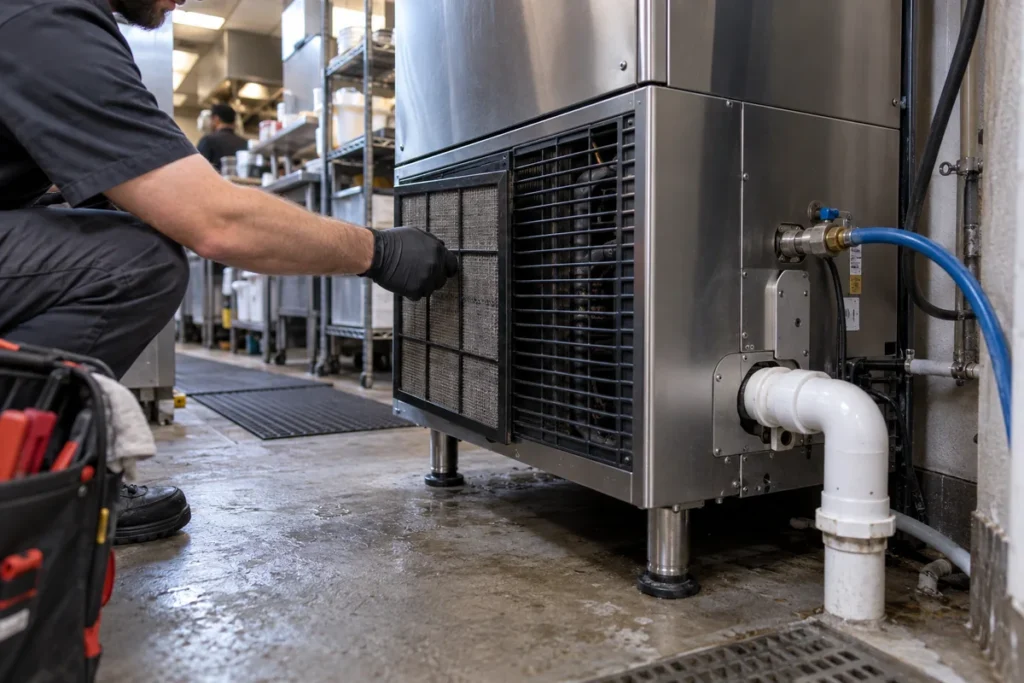
Air-cooled and water-cooled ice machine prices need an operating-cost comparison as well as an equipment comparison. Request air cooled vs water cooled ice machine costs with installation, ventilation or water requirements and the actual model’s utility information identified from the start.
When choosing commercial ice machines, the available space can narrow the options. Ask the dealer to inspect the proposed position and confirm that the machine can operate as specified there. A low purchase price cannot compensate for an unsuitable installation.
Ice Machine Cooling and Placement
Ask the supplier to explain how the proposed condenser rejects heat and what clearances or connections it needs. Keep those requirements separate from the water used to make ice. The equipment specification should identify the configuration rather than relying on a general product-family description.
The commercial ice machines buying guide helps you compare the complete machine and bin arrangement. Include surrounding equipment and the room’s normal conditions in the discussion, especially where several heat-producing appliances share a confined area. Do not assume that a machine with the right footprint has enough operating clearance.
Compare Energy and Water Costs
Request energy use and water use for the actual models under comparable rating conditions. ENERGY STAR’s commercial ice maker criteria use measures such as energy per quantity of ice and potable water consumption. Its eligible categories focus on air-cooled equipment; a water-cooled model should not be assumed to have the same certification.
Review commercial ice machines prices with utility assumptions shown separately. Apply your own water, sewer and electricity rates to the supplier’s documented figures, and identify any usage assumptions. The resulting estimate is a planning tool, not a promise of the bill your premises will receive.
Ask whether the proposed water-cooled arrangement needs additional water or drainage infrastructure and have the responsible local professionals confirm suitability. Conversely, ask what room ventilation or heat-management work an air-cooled option would require. Compare the actual installed alternatives rather than assuming one is always cheaper.
Ice Machine Utility Calculation
Assume, purely for illustration, that one shortlisted machine uses 4 kWh per 100 pounds of ice and another uses 6 kWh. At 500 pounds daily for 300 days, the difference is 3,000 kWh annually; at an assumed $0.15 per kWh, that is $450. These are not product ratings. Water, sewer, installation and ventilation costs are excluded and could change the result; substitute documented figures for the actual models.
Service and Total Installed Price
Have each provider list the machine, bin, filters, connections, installation and service coverage. Ask about routine cleaning and the parts of the system that require attention. A complete proposal should explain who maintains both the ice-making equipment and its associated components.
Use the commercial ice machines FAQs to prepare your enquiry. Supply the same production requirement and location information to competing dealers, then compare the installed cost with the operating assumptions beside it. Choose the configuration that suits the premises and required output at a clear total price, with the utility and maintenance responsibilities understood before delivery.
Ready to compare air cooled vs water cooled ice machine costs? Get prices for the equipment or service you need.