Business Phone Buying Guide: Count Licenses Correctly
List individual users, shared devices, department numbers and any lines tied to alarms or other specialist equipment. Do not assume every telephone number requires a full user subscription, or that a shared device can use any plan.
Ask the provider to explain the license assigned to each item. This makes competing business VoIP proposals comparable and helps prevent overbuying before the first phone is connected.
VoIP Call Queues and Auto Attendant Setup
Sketch the route for a sales call, an existing customer and an urgent enquiry. Keep the menu short and give unanswered calls a sensible destination. Ask whether queue features, reporting and recordings are included or charged separately.
Test the configuration with real staff before launch. The useful measure is whether callers reach the right person, not how many routing options appear in the sales presentation.
Business Phone Hardware and Network Readiness
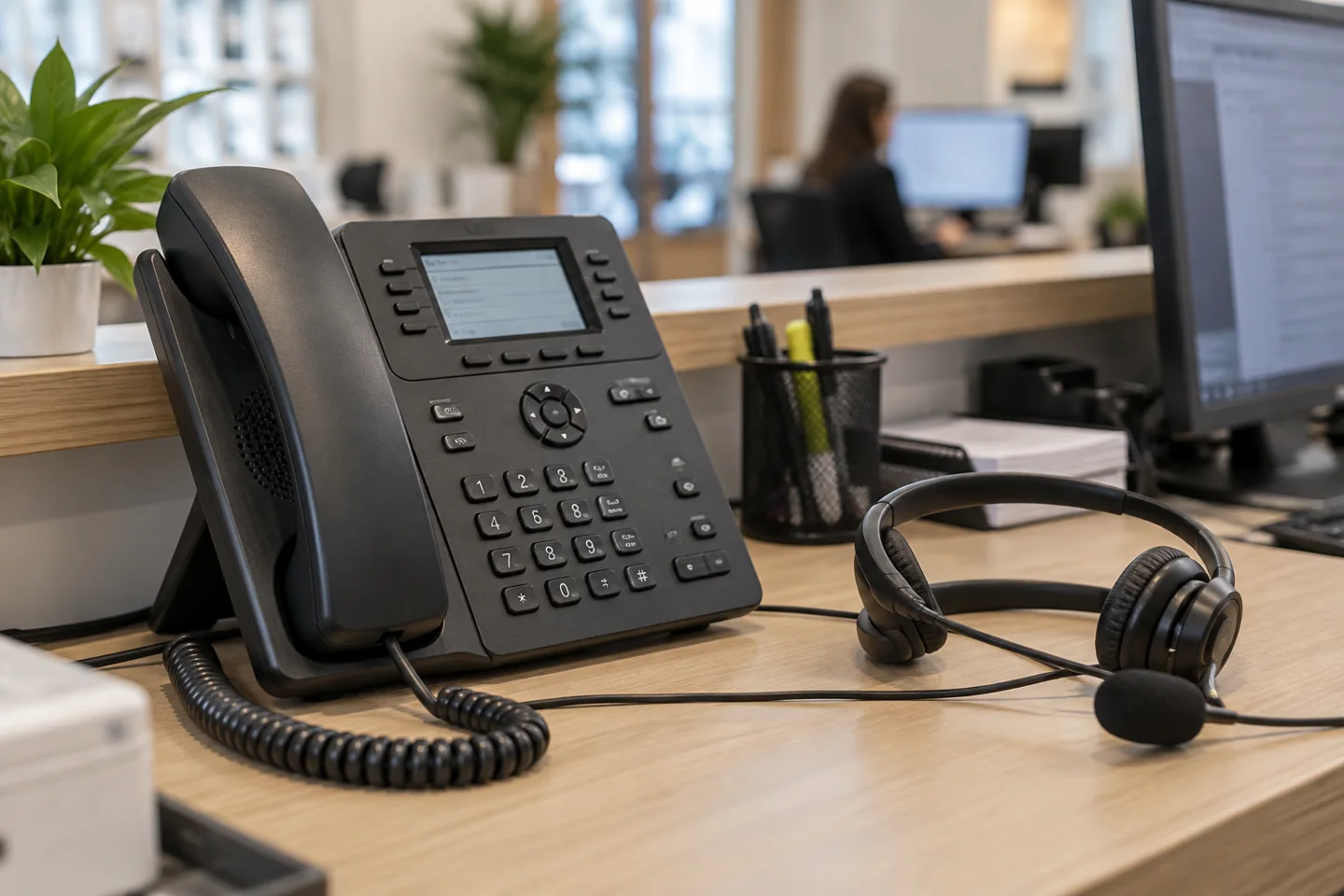
Confirm supported phone models, headset compatibility and how devices receive power. Ask who configures the phones and resolves network-related issues. If you retain existing devices, get model-level compatibility confirmed rather than accepting a broad brand assurance.
Check call quality on wired and wireless connections where relevant. A fast download speed alone does not establish that a network will handle every voice call consistently.
VoIP Contract Prices, Renewals and Number Control
Separate introductory rates from renewal prices. Review the minimum term, cancellation calculation and charges for features that are initially included. Confirm the process for moving your numbers if you leave.
Compare a normal month and a month with extra users or heavier calling. Use the business phone FAQs to refine your questions, then request a written price for the system you intend to run.